From Flat Puzzle to 3D Puzzle Vase: Why It Stays Out
A flat puzzle ends. A 3D puzzle vase begins.
Most of us know the flat-puzzle routine. You clear the table, sort the edges, and feel that small rush when the last piece fits. Then comes the awkward part: the picture is beautiful, but it has nowhere to live. Framing it is a project of its own, and leaving it on the table means you cannot use the table.
A 3D puzzle vase for adults solves that problem by changing what "finished" means. You are building the vase itself, piece by piece, until it can stand on its own. The work becomes part of the room.
Why a finished puzzle should stay out
This is part of a wider shift in how adults puzzle. More puzzlers want a screen-free hobby that leaves something behind — not just a finished evening, but a finished object. A puzzle that becomes home decor gives you the slow pleasure of sorting and fitting pieces, and then it keeps giving: every time you walk past it, you see what your hands made.
It also changes how a home feels. A framed puzzle says, "I finished this once." A puzzle vase says, "I made this, and I still use it." Guests ask how it was made, and whether it really holds water.
Three forms, three jobs in the house
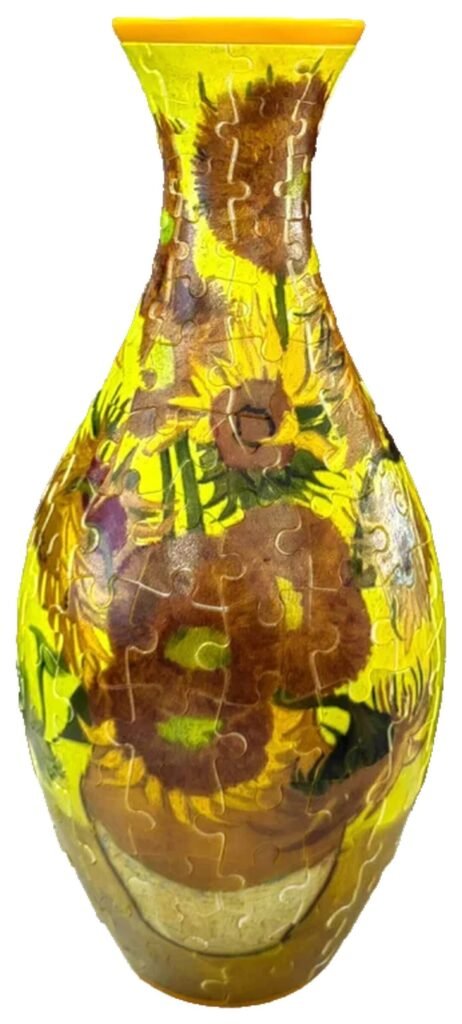
The finished piece needs a real job. A 3D puzzle vase is the clearest example: once built, it has a water reservoir inside, so it works like a real vase. Put in three to five stems, change the water every two or three days, and the arrangement lasts as well as it would in any other vase.
A puzzle planter works the same way in a different corner of the house. Build it, fill it, and plant something small — mint, a succulent, a herb for the kitchen window. The plant gives the puzzle a second life, because it keeps growing after the building is done.
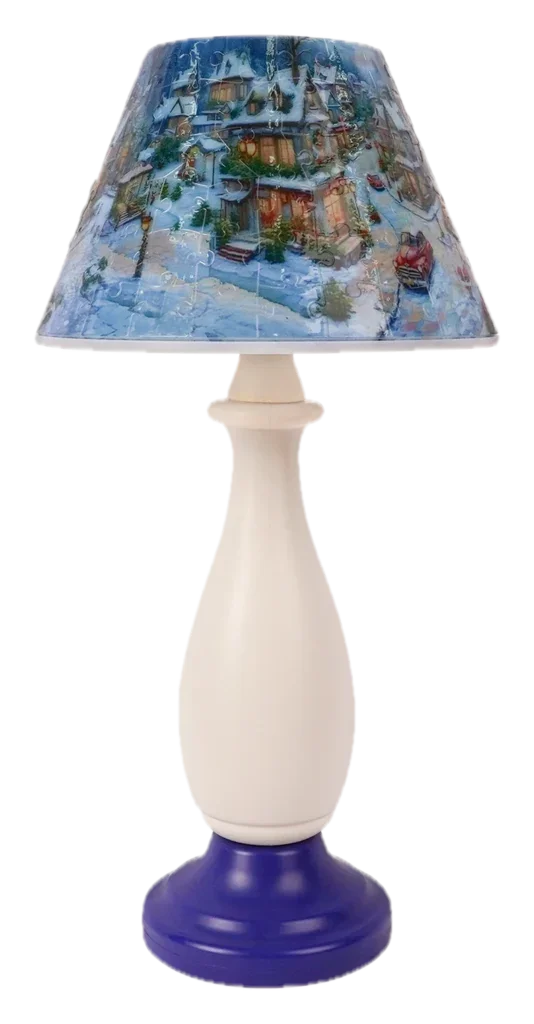
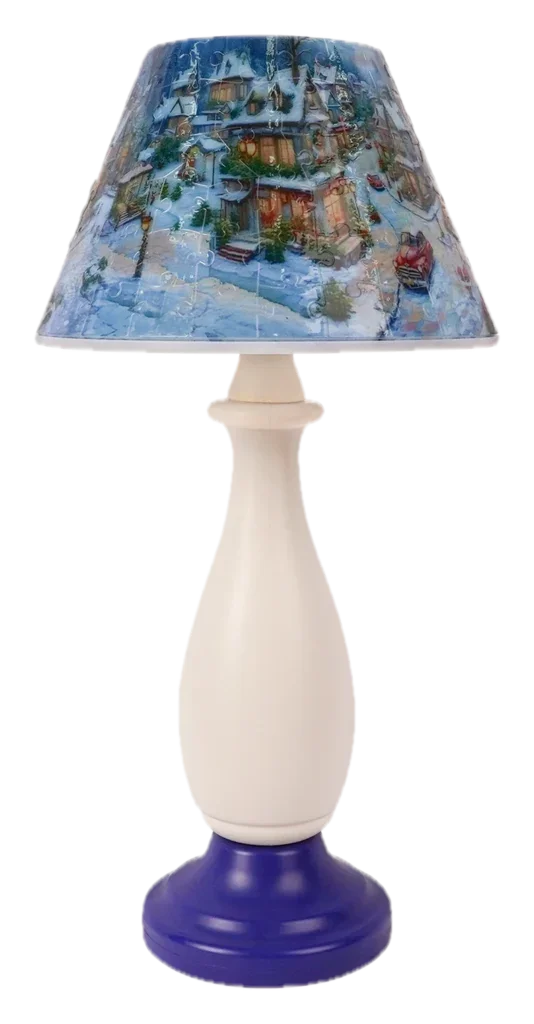
A puzzle lamp completes the set. By day it is a sculptural object on a side table or a desk. At night, switched on, it becomes the warm corner of the room. In each case, the puzzle is your decor, with a story attached.
How to choose your first one
If you are choosing a puzzle vase for adults for the first time, start with the room, not the pattern. A tall, slim vase suits an entryway console or a dining table. A rounder shape suits a coffee table or a bookshelf, where it will be seen up close. A softer, neutral pattern is easier to live with if your room is already colorful; a bold floral pattern can carry a quiet corner on its own.
Then think about time. A 3D puzzle vase is meant to be built over a few relaxed evenings, not raced through in one sitting. You sort a little, build a little, and watch a shape rise in your hands. When you are tired, you stop — the vase will still be there tomorrow, a little taller than it was.
Make it a home decor centerpiece, not a shelf ornament
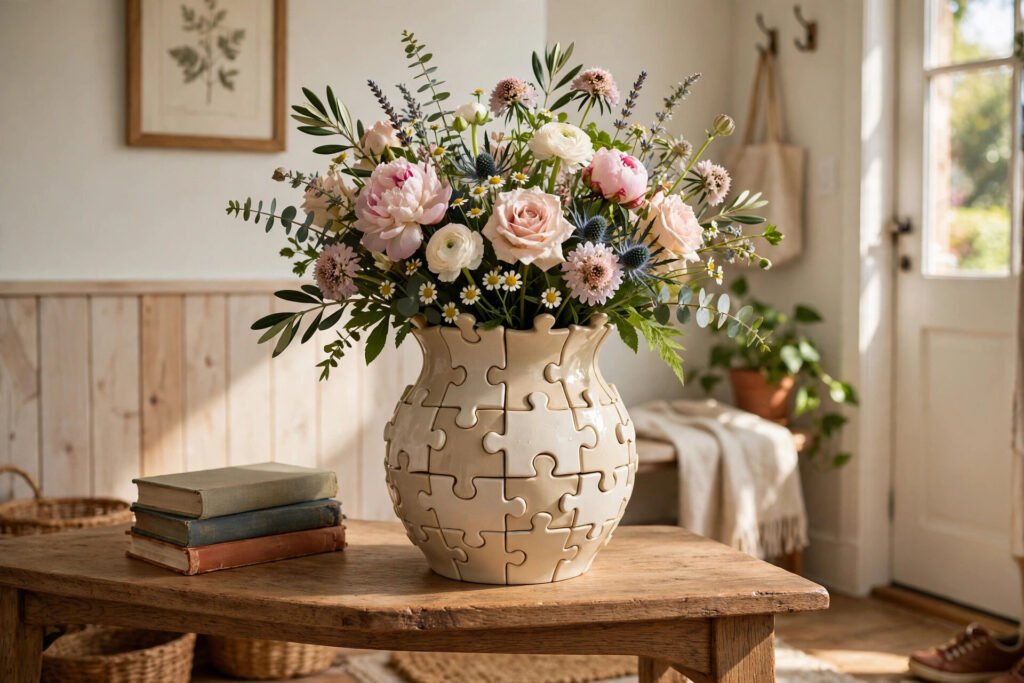
Once it is built, give it a real place. An entryway table is a natural home for a puzzle vase, because it is the first thing you and your guests see. A dining table works well too: with fresh flowers in it, the vase becomes a home decor centerpiece without needing a whole new table setting around it.
Keep the styling simple. The vase is already the statement, so it does not need a crowded display around it. A few stems, a little daylight, and some empty space are enough. Change the flowers with the season, and the same vase will look different all year — without buying anything new.
That is the real difference between a flat puzzle and a 3D puzzle vase. One asks, "Where will I put this when it is done?" The other answers its own question. Build it first, then fill it — and let it stay out, where the evening you spent making it can keep living in the room.