How to Host a Screen-Free Puzzle Night at Home
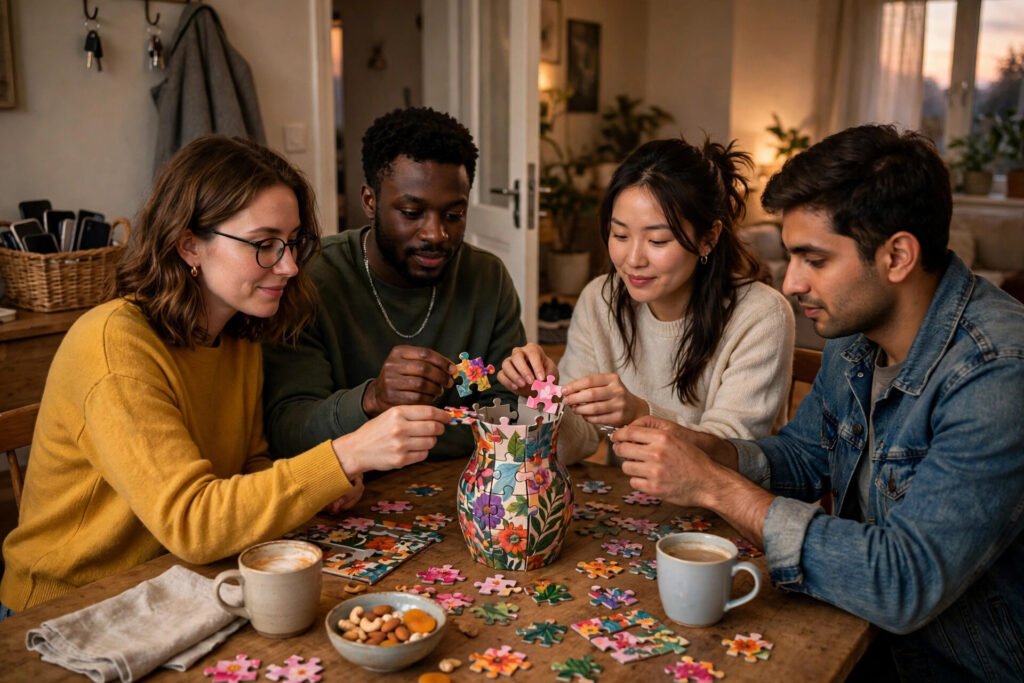
A screen-free puzzle night is the easiest party you will ever host. There is no playlist to perfect, no game to teach, and no one has to be good at small talk. Everyone gets a job, everyone can see the progress, and conversation finds its own way in.
That is why puzzle nights are coming back this fall, alongside other low-screen hobbies: people want an evening that feels calm, social, and finished — not another night spent scrolling in the same room.
Keep the group small and the time short
Four people is the sweet spot. Two can feel quiet, six can feel crowded around one table, but four lets everyone reach the pieces without bumping elbows.
Ninety minutes is plenty. Put a clear window on the invitation — "7 to 8:30, puzzle night, snacks provided" — and mean it. A short evening makes it easier for busy friends to say yes, and keeps the night from turning into an endurance test.
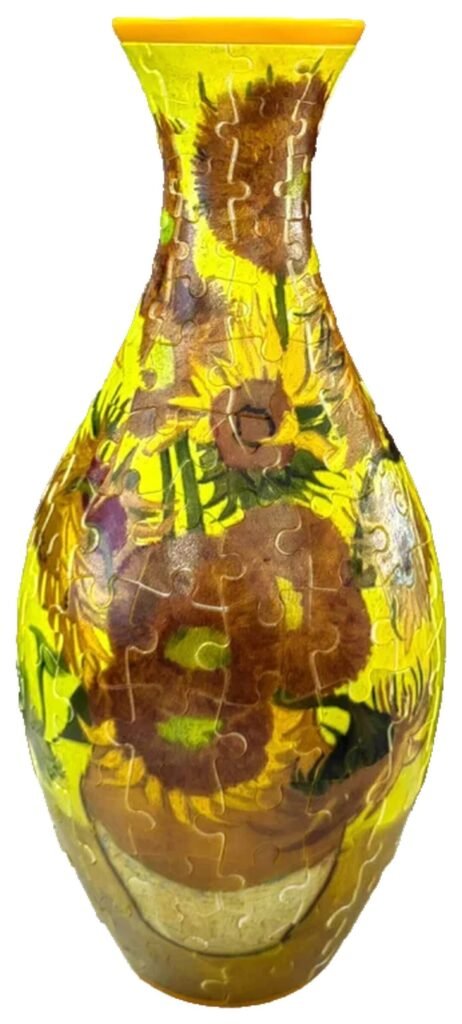
Choose a table with good light. A dining table or kitchen island beats a coffee table, giving everyone elbow room and a flat sorting surface. If you are building a 3D puzzle vase, leave extra space in the middle: it grows upward as you build.
Give everyone a job, not just a seat
The fastest way to make a puzzle night awkward is to let one person take over while everyone else watches. So hand out roles before you open the box: one person sorts the edges, one sorts by color, one matches pieces to the picture, one builds. After twenty minutes, rotate.
Rotating matters, because it stops the night from becoming "one expert and three spectators."
A 3D puzzle vase is ideal for a group for the same reason. A flat puzzle can feel like a test — right piece, wrong piece, done. A puzzle vase feels like building something together: each curved piece clicks into place, the shape slowly appears, and no one has to finish it alone to enjoy it.
Put the phones away, kindly
You do not need a speech about screen time. Just put a small basket by the door and make it part of the welcome: "Phones in here, snacks over there." Most people are relieved, not offended. They came because they wanted a break, and the basket gives them permission to take one.
Keep snacks simple: grapes, cheese cubes, and popcorn in small bowls beat anything that needs a fork. Put drinks a little away from the table, not next to the half-built vase.
Talk will come and go, and quiet stretches are fine. Sorting pieces side by side is a comfortable kind of togetherness.
End with something that stays in the room
Here is the part most puzzle nights miss: plan the ending, not just the start.
If you finish the vase, fill it. Three to five stems are enough — sunflowers, tulips, or whatever looks good at the store that day. Put it where everyone will see it next time they visit: the entryway table, the dining table, or a sunny windowsill. A finished puzzle vase becomes a home decor centerpiece, and every time your friends see it, they remember the night they built it.
If you do not finish — and most groups will not, in ninety minutes — that is fine too. Leave the vase on the table, half-built, like a bookmark, and pick it up next visit.
And if you are looking for a gift that starts this kind of evening, a puzzle vase gift is hard to beat. It is not just an object to unwrap. It is an invitation: come over, build this with me, and stay for a while.
A good puzzle night does not need to be impressive. It needs four chairs, one table, and one thing worth making together. The vase is just the excuse. The evening is the point.